
Digital PCR Systems for Absolute Quantification
Fully automated chip-based digital PCR: 24 samples per run, up to 7 fluorescence channels, ultra-multiplex detection up to 63 targets and results in three hours or less – plus a multi-modality model that adds digital immunoassay.
For research use only. Price on request – one quotation for instrument, chips and reagents.
Choose Your Digital PCR System
Two models on the same chip-based engine.
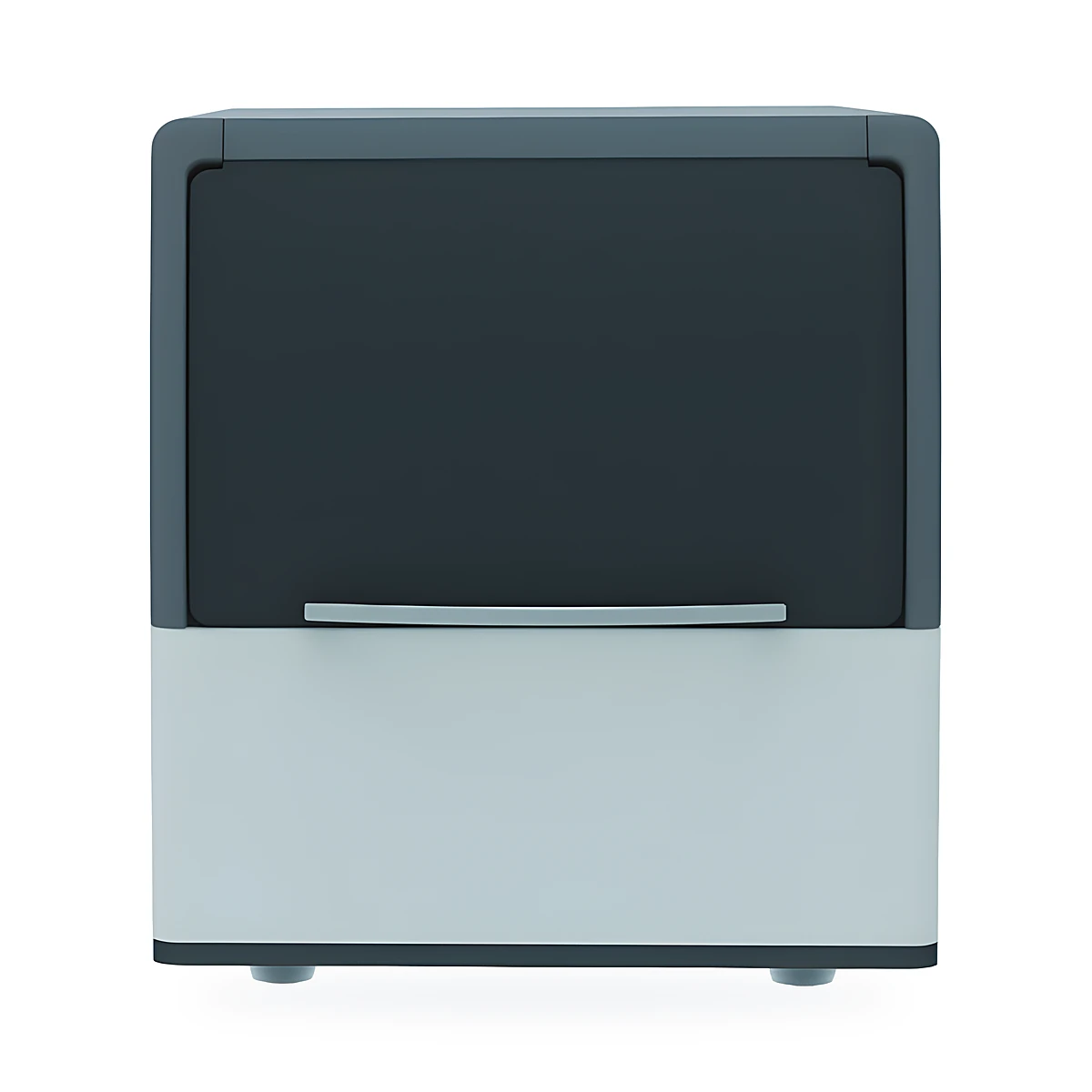
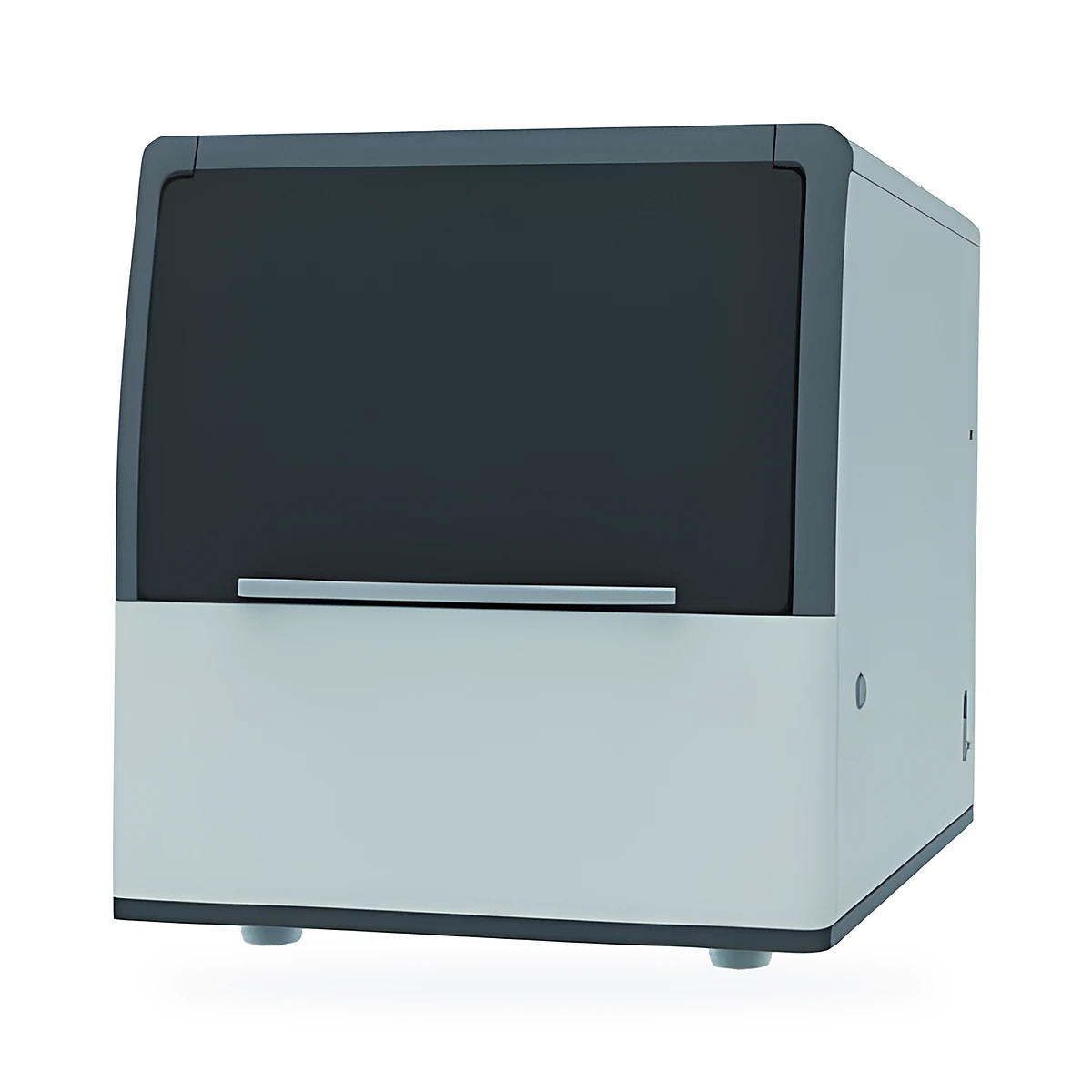
CY-PCR-02Chip Digital PCR System, 24 Samples
- 24 samples per run, minimum 2
- 2 to 7 fluorescence channels
- Up to 63-plex quantification
- ≥98% effective partitions
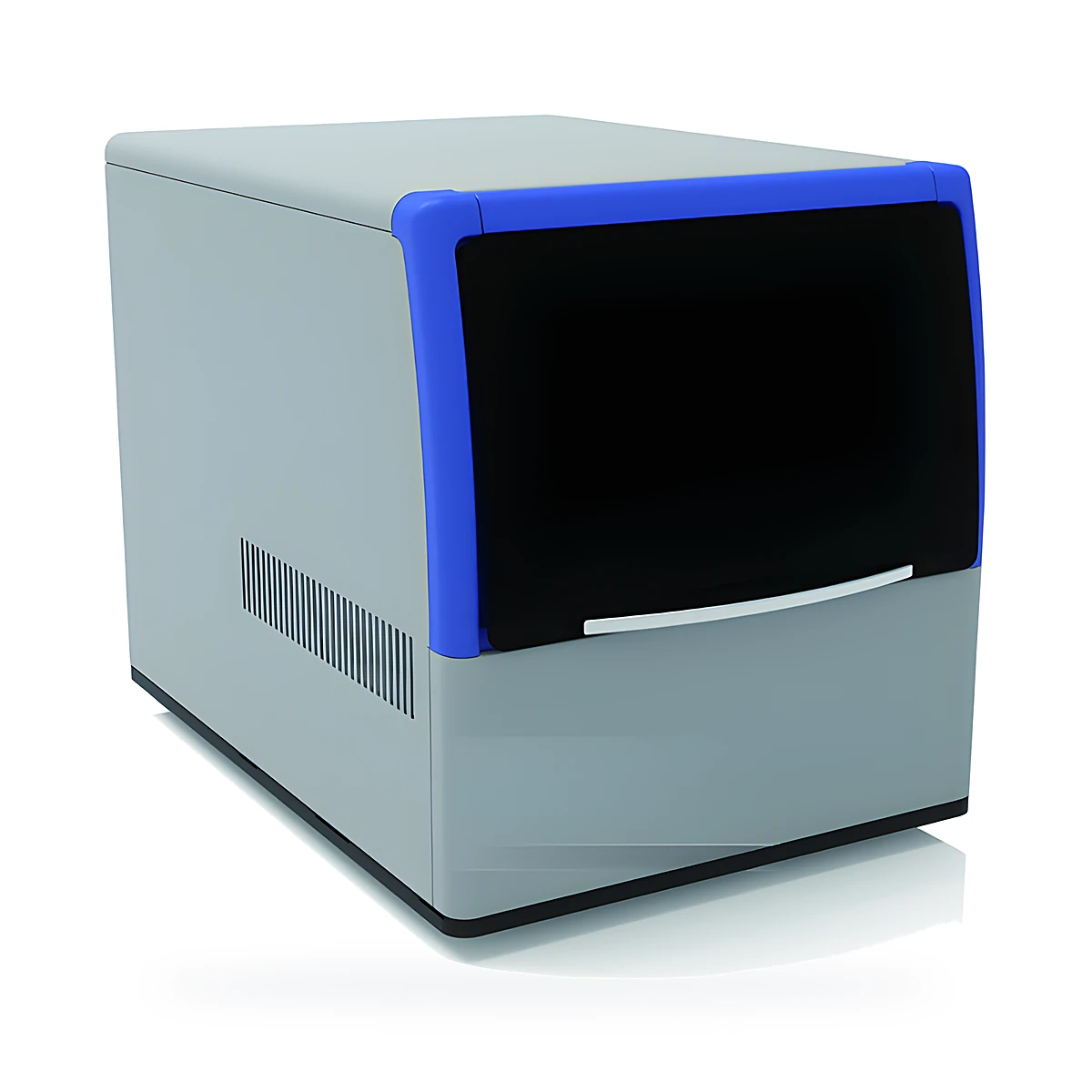
CY-PCR-03Digital Multi-Modality Molecular System
- dPCR + digital isothermal + digital immunoassay
- fg/mL protein detection with matched kits
- 24 samples per run, 4–7 channels
- One platform for DNA, RNA and protein
Compare the Models
Manufacturer specifications.
| CY-PCR-02 Chip dPCR | CY-PCR-03 Multi-Modality | |
|---|---|---|
| Modalities | Digital PCR | Digital PCR, digital isothermal, digital immunoassay |
| Samples per run | 24 (min. 2) | 24 (min. 2) |
| Fluorescence channels | 2 / 3 / 4 / 5 / 6 / 7 / (6+1) | 4 / 5 / 6 / (6+1) |
| Partitions per sample | > 20,000 | > 20,000 |
| Effective partition ratio | ≥ 98% | ≥ 95% |
| Sensitivity / dynamic range | 0.01% / 5 logs | 0.01% / 5 logs |
| Run time | ≤ 3 h | ≤ 3 h |
| Width | 440 mm | 440 mm |
How Chip Digital PCR Works
From sample to absolute copy number in four automated steps.
Partition
The reaction is split into 20,000+ partitions in a glass microfluidic chip; solidified oil seals each one.
Amplify
Dual thermal modules run PCR (or isothermal) programs, with temperature gradient if needed.
Read
The CMOS optical system scans each chip – under 0.5 min per sample per channel.
Count
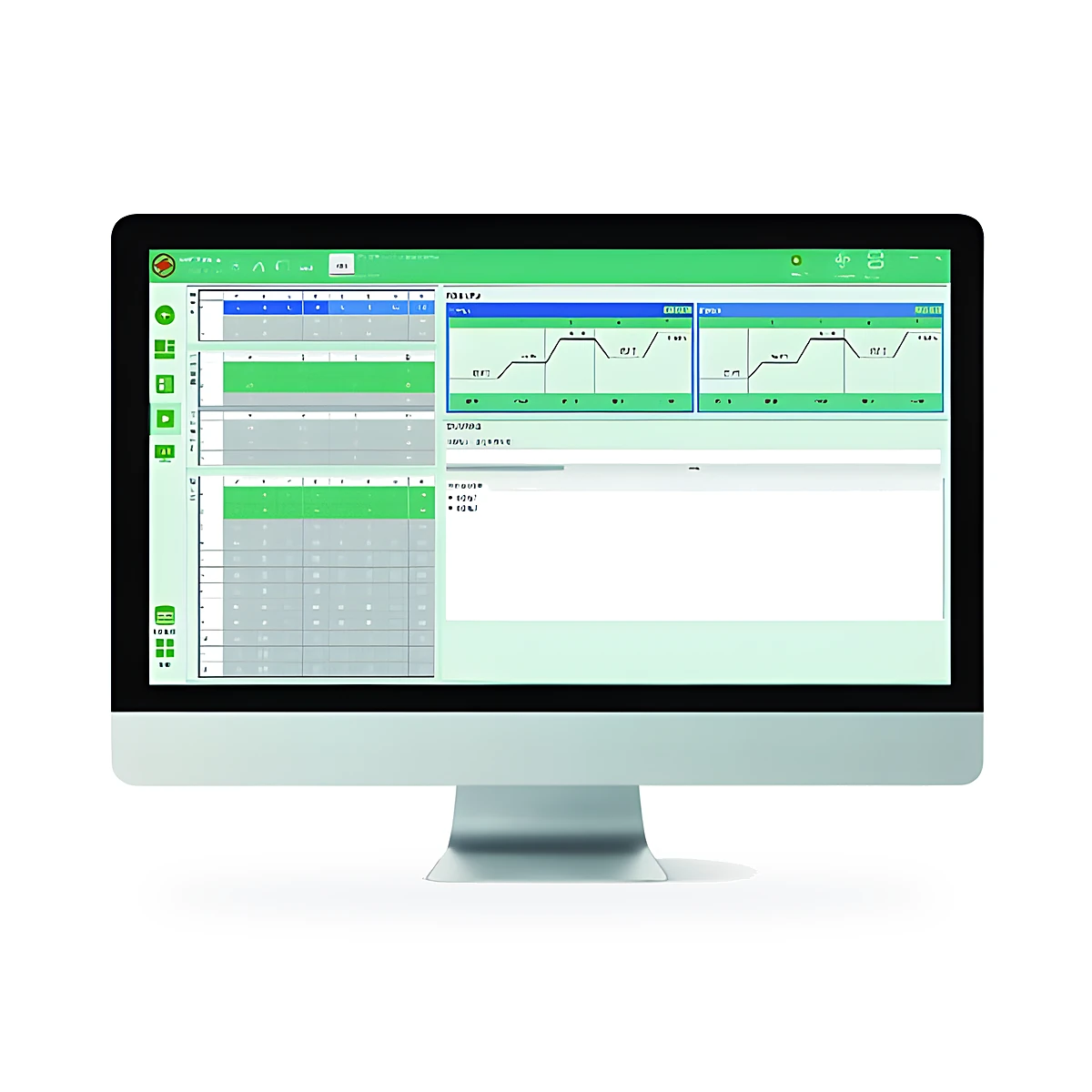
AI-assisted analysis counts positive partitions and reports copies/µL, CNV or mutation abundance.
Digital PCR vs qPCR at a Glance
Read the full comparison in our guide dPCR vs qPCR.
| Digital PCR | qPCR | |
|---|---|---|
| Quantification | Absolute – counts molecules | Relative – needs a standard curve |
| Precision for small fold changes | High | Moderate |
| Rare mutation detection | Down to 0.01% (this platform) | Typically around 1% |
| Inhibitor tolerance | Higher (end-point counting) | Lower (Ct shifts) |
| Throughput & cost per sample | Moderate | High throughput, lowest cost |
| Best for | Rare targets, CNV, absolute copy number, reference values | Routine screening, expression trends |
Applications
Where digital PCR makes the difference.
Reagents, Chips and Assays
One supplier for the complete digital PCR workflow.
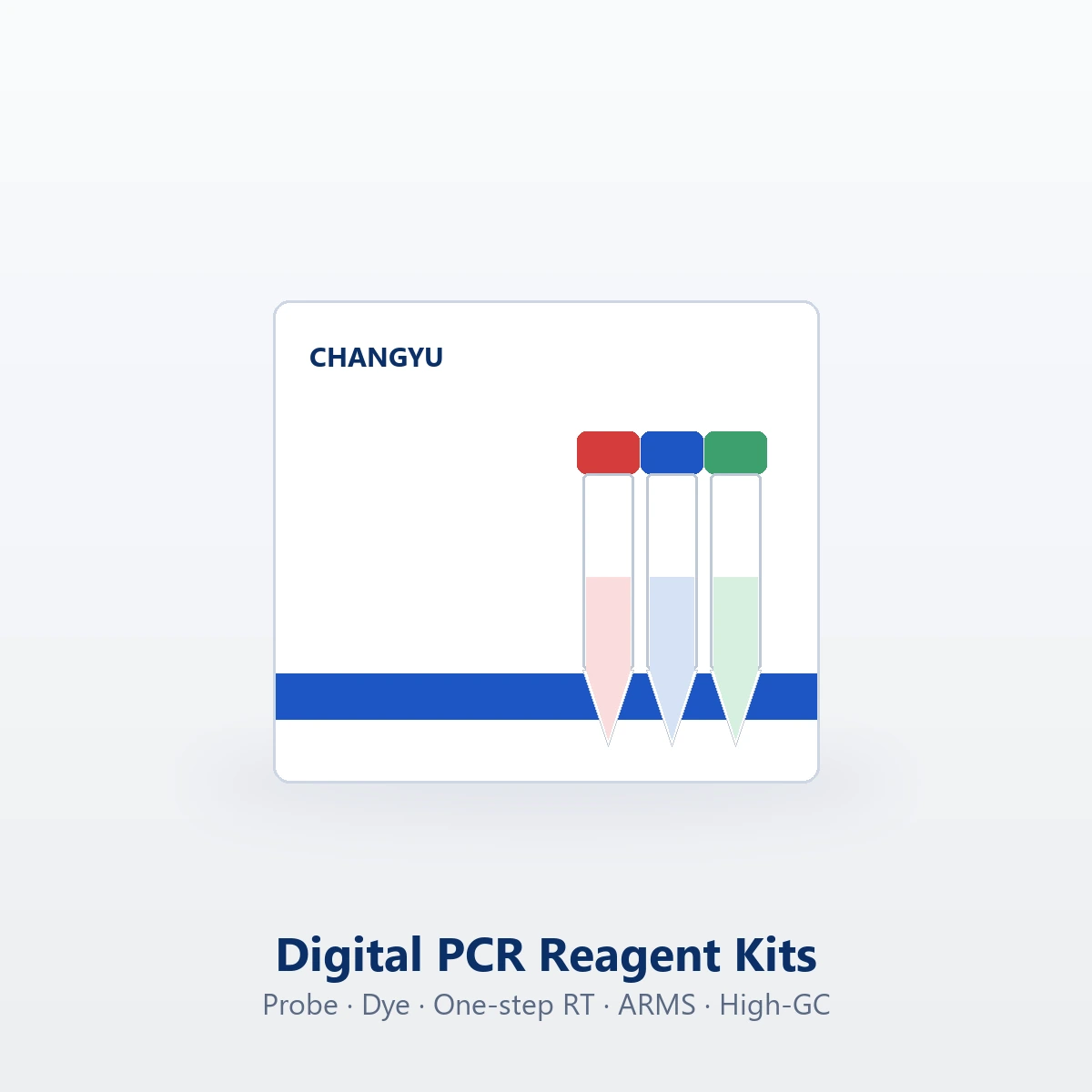 CY-PCR-04Digital PCR Reagent Kits
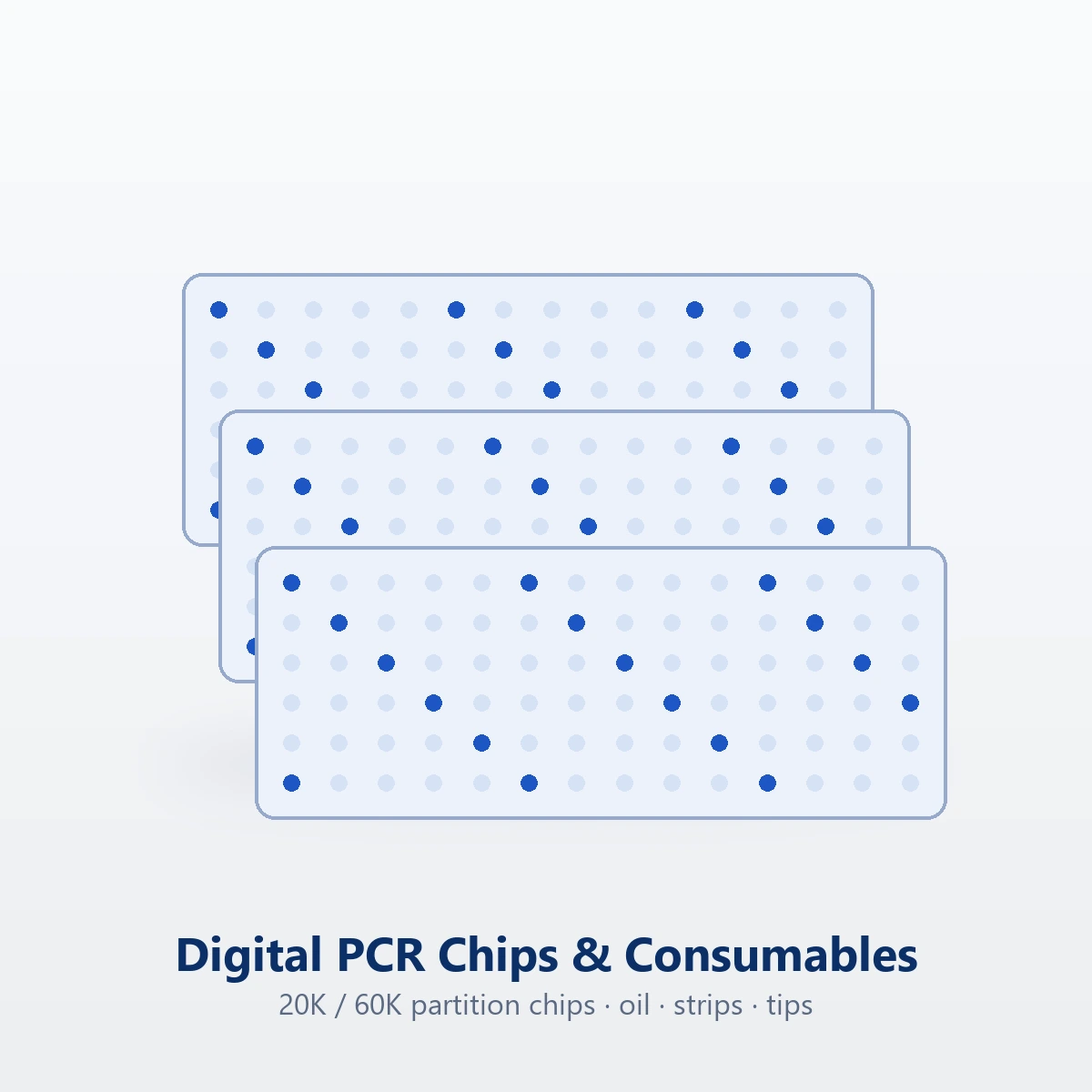 CY-PCR-05Digital PCR Chips & Consumables
 CY-PCR-06High-Specificity Taq Polymerase
 CY-PCR-07Multiplex dPCR Research Panels
Guides
Background reading before you buy.
Frequently Asked Questions
Digital PCR buying questions, answered.
What is a digital PCR system?
A digital PCR (dPCR) system splits a PCR reaction into thousands of tiny partitions, amplifies them, and counts positive and negative partitions. Using Poisson statistics it reports the absolute number of target copies per microlitre – no standard curve is needed.
What is the difference between digital PCR and qPCR?
qPCR measures how fast fluorescence rises and needs a standard curve for quantification. Digital PCR counts molecules directly, giving absolute quantification, better precision for small fold changes and higher tolerance to inhibitors. qPCR remains faster and cheaper for routine screening.
Chip-based or droplet digital PCR – which is better?
Both partition the sample. Chip-based systems such as CY-PCR-02 fix partitions in a microfluidic chip, which avoids droplet fusion and transfer steps and supports a fully automated workflow. Droplet systems can offer more partitions in some setups but usually need more handling.
How much does a digital PCR system cost?
Price depends on the number of fluorescence channels, modalities (dPCR only or dPCR plus immunoassay), software options, consumables and destination. Changyu Bio quotes instrument, chips and reagents together – request a written quotation.
How many samples can be run per day?
CY-PCR-02 and CY-PCR-03 run up to 24 samples per run in 3 hours or less, with a minimum of 2 samples per run.
What sensitivity can digital PCR achieve?
The systems offered here specify 0.01% sensitivity with a 5-log dynamic range and ±10% quantification accuracy.
Can my qPCR assays run on these systems?
Most commercial PCR master mixes and probe assays are compatible, and dedicated digital PCR reagent kits are available for best performance.
Do you ship worldwide?
Yes. Power supply (voltage/plug), documentation and shipping terms are confirmed for each order in the quotation.
Request a digital PCR quotation
Tell us the model, number of channels, expected sample volume and destination. We reply with a written quotation covering instrument, chips, reagents and shipping.